Calling all soothsayers – “truth sayers”
De bamboozling trickster parts of ourselves
to dedicate to
Dispelling the Phantasmagoria
phantasmagoria(n.)
“fantastic series or medley of illusive or terrifying figures or images,” 1802, the name of a magic lantern exhibition brought to London in 1802 by Parisian showman Paul de Philipstal. The name is an alteration of French phantasmagorie, which is said to have been coined 1801 by French dramatist Louis-Sébastien Mercier as though to mean “crowd of phantoms,” from Greek phantasma “image, phantom, apparition” (from PIE root *bha- (1) “to shine”).
Saturn Neptune :
“Solve et Coagula” -disolve and re-imagine
“Dissolution is the secret of the Great Work….”
Community arising aroused…Dissolves cults –
*Tyranny attacks community (the toxic mimic v the authentic)
(or as Evangeline said last week… “the absence of Community allows tyranny to emerge…”)
Out of the Void – what shall we see emerging…?!
Jupiter quintile Chiron “through imagination lost opportunities are regained”…: the lineage of mentors encourages us all to assume cultural narrative lead
and the dreadful corrupt bill – still beig debated in Senate….
Let’s slow it down, toss into cauldron , so it fizzles like wet fire
-cracker fart..
https://www.aljazeera.com/
essential watching on Palantir…
https://www.facebook.com/
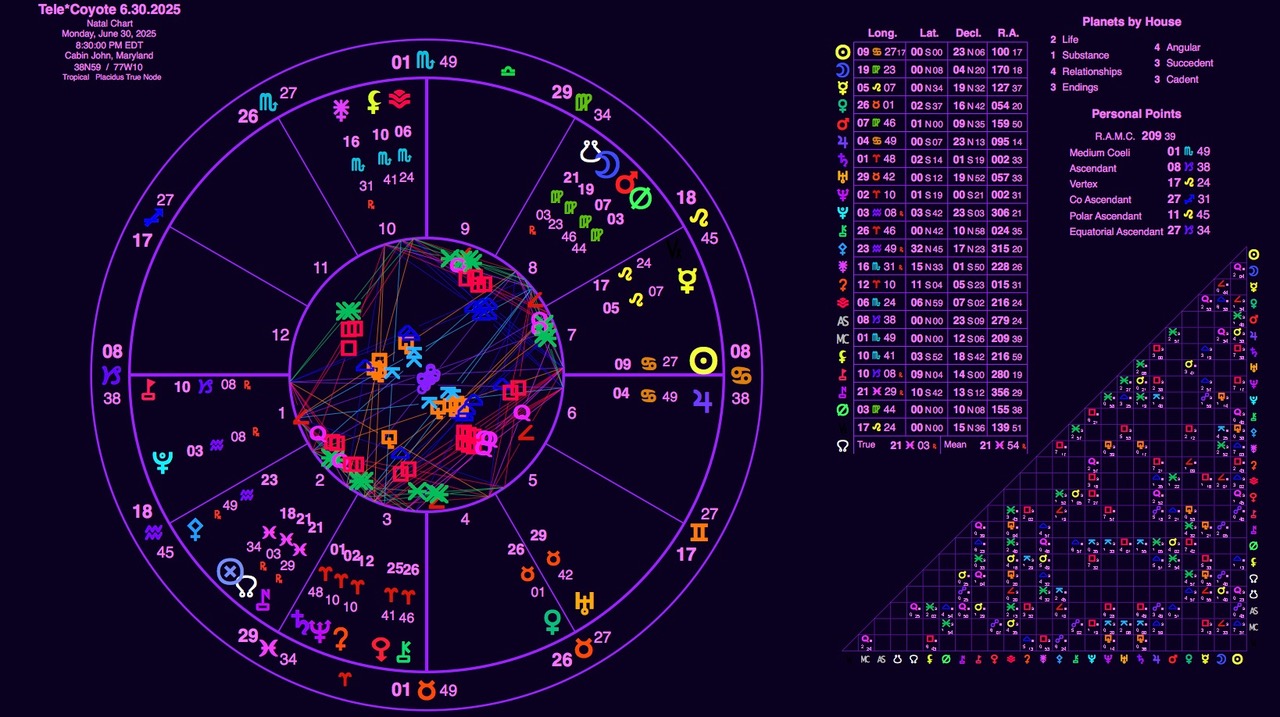
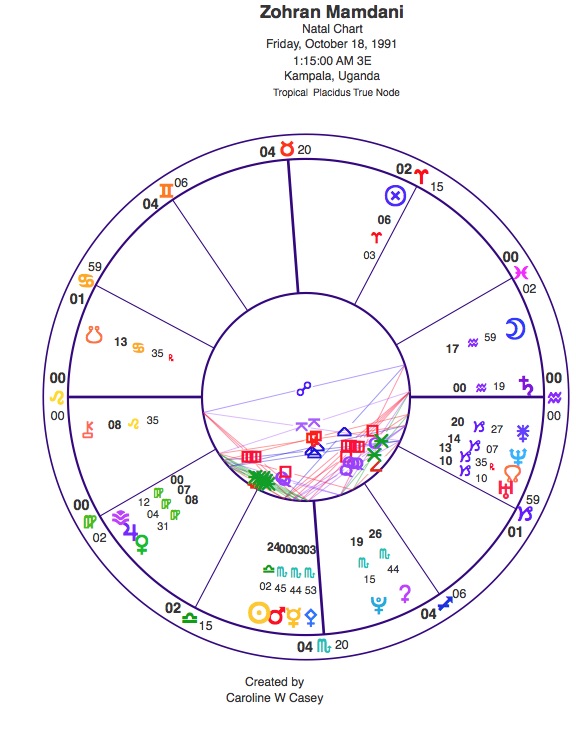
and below chart – be worthy read on language- and what intifada means…
Corey Robin
I wasn’t going to respond to this issue, but I see that Hakeem Jeffries went there this morning, condemning Zohran Mamdani, so I’m going to address it.
On the Bulwark podcast of June 17, an interviewer asked Mamdani, “I wonder what you think about that, about the phrase ‘globalize the intifada.'”
Mamdani gave a lengthy response, which I’ve screen-shotted in two parts and put in the comment thread. I can’t urge you, strongly enough, to read his entire response. To me, it is a model of integrity—not sacrificing one’s values or pandering to voters—AND sensitivity to those voters and their concerns.
I want to highlight two points in his response (though he says a lot more than this, which again, I urge you to read.)
First, well into his answer, after he has discussed at length the real facts of antisemitism in the US and the fears that Jewish people have of it, Mamdani makes the point that up until November 2023—that is, a full month after October 7—the United States Holocaust Memorial Museum used the phrase “intifada” to translate its own articles on the Warsaw Ghetto Uprising into Arabic.
At first, I thought to myself, can that be true? And I’ll admit, I found it initially hard to get an answer to my question because all I could find on the internet was the Holocaust Museum’s denouncing Mamdani for “exploiting the Museum and the Warsaw Ghetto Uprising to sanitize the ‘globalize the intifada'” phrase. I thought to myself, hmm, well, that doesn’t exactly sound like a rebuttal of a point. Sounds like a lot of hand-waving to distract us from his point.
Then, after some digging, I found an extremely useful article in The Forward, which, as some of you know, is the main Jewish publication in the United States. According to the Forward, Mamdani is, in fact, correct. Until November 2023, the US Holocaust Memorial Museum did use the word “intifada” to translate its article on the Warsaw Ghetto Uprising.
And there is a reason for that. As the author of the Forward piece reported, she consulted with an expert at Boston University on Arabic and comparative literature. This is what The Forward learned from the expert, whose name is Margaret Litvin, and with whom, I just discovered, I am Facebook friends. Hi, Margaret! Nice to meet you!
I apologize for the long excerpt from The Forward, but it’s critical for our understanding:
‘Litvin, who is Jewish, explained in an interview that “intifada” is uniformly translated as “uprising” by Arabic scholars. It’s also used by the main Arabic Wikipedia article on the Warsaw Ghetto Uprising, as well as by Google Translate and DeepL, a translation software engine most commonly used by professional translators. The term is used so universally precisely because it does not inherently connote violence, Litvin said, but instead refers to the act of rising up against or standing up and shaking off a greater power.
There are few, if any, reasonable substitutes for the word, Litvin said. The USHMM’s Arabic page on the Warsaw Uprising appears to have replaced the term “intifada” with “muquwama,” or “resistance,” sometime in the last 16 months. In Litvin’s view, that’s a mistranslation: “Resistance” implies an ongoing act, she said, while the Warsaw Ghetto Uprising was tragically short. “Intifada” is also used regularly outside of the Palestinian context. Litvin shared examples from Arabic-language news sources, including one that described the new Syrian leader Ahmad al-Sharaa’s capture of the city of Daraa in late 2024 as “capturing the cradle of the Syrian intifada.”
Another Egyptian news report, speaking about the 2011 Arab Spring, wrote in Arabic that it had been “14 years since the 2011 intifada.” Unlike recent headlines about Mamdani, Litvin said, “it is all very subtle.” Plus, “intifada” “implies an asymmetry” in power, Litvin said, “which is why it’s used to translate the Warsaw Ghetto Uprising.” The Arabic word for “a struggle,” for example, “sira’a,” is defined more mutually, as two equal competitors wrestling or fighting.’
So that’s a critical context for Mamdani’s remarks.
But, ah, you will say, and the author of The Forward does say it, as does the podcast guy who is interviewing Mamdani: Whatever the finer and fancier points of translation, the phrase is insensitive to Jewish voters, who make up 960,000 people in New York City.
Here, I think, we run into some problems, which actually get at the social/political truth of the matter. There are roughly 800,000 Muslim voters in New York City, and most experts are fairly clear that that number is growing and that Muslims will soon form a larger part of the New York City population than Jews.
Now, the connection between Arab and Muslim is obviously not one-to-one. Indonesia has the largest Muslim population in the world. But Arabic is the language of Islam.
If we’re going to start talking not about the meaning of words, but about what words mean to certain people, we’re going to have to reckon with the fact that Muslims are as much a part of the New York population as Jews are and that words mean something to them, too. And as much as intifada may mean, to New York Jews, violent terrorism against Jewish Israelis—though, please, let’s not forget that the First Intifada was overwhelmingly nonviolent, which is why it was so inspiring to many *Jewish* Israelis at the time—we have to acknowledge that it probably means something different to an almost equivalent size population of non-Jews in New York.
So why must Mamdani cater only to the feelings and anxieties and perceptions of Jewish New Yorkers, forsaking the feelings and anxieties and perceptions of non-Jewish New Yorkers, who could easily feel forsaken by a Muslim man disavowing a term that is commonly recognized in the Arabic world and among Arabic speakers, and I’m guessing, in the Muslim world as well, as a generally positive term?
I’m going to come to this question in a minute. But before I do, I want to quote what Mamdani said on this issue, in response to the podcaster:
“I know people for whom those things mean very different things. And to me, ultimately, what I hear in so many is a desperate desire for equality and equal rights in standing up for Palestinian human rights. And I think what’s difficult also is that the very word has been used by the Holocaust Museum when translating the Warsaw ghetto uprising into Arabic because it’s a word that means struggle. And as a Muslim man who grew up post-911, I’m all too familiar in the way in which Arabic words can be twisted, can be distorted, can be used to justify any kind of meaning. And I think that’s where it leaves me with a sense that what we need to do is focus on keeping Jewish New Yorkers safe. And the question of the permissibility of language is something that I haven’t ventured.”
What I take Mamdani to be saying is that he grew up after 9/11, when the dominant society took all sorts of Arabic words out of context and pretended they meant something different than what they meant. And he’s raising the question, a question for all of us, do not the opinions and views and interpretations of Arabic and Muslim New Yorkers matter as well?
Now let me come back to what I think is the social and political reality in this conversation, which is something that Peter Beinart brought up on that podcast from Jewish Currents that I posted the other night.When Jewish New Yorkers say that politicians ought to be sensitive to their anxieties and fears and vulnerability, they’re speaking from a relative position of privilege and power. It’s not because Jews in New York are a marginalized or subjugated or persecuted minority that they tell the man who won the Democratic Party primary and could very likely be the next mayor of NYC, pay no attention to what words actually mean in their own language, pay attention to what we take those words to mean, to us, pay attention to our experience, our fear. When Andrew Cuomo and Hakeem Jeffries and Kirsten Gillibrand and every other powerful politician—not to mention the even more powerful mavens of Wall Street and real estate—say the same thing, that just proves the point: Jewish opinion really matters a lot because Jewish people are taken seriously not just as a moral issue but as a question of power in politics, culture, and society as a whole.
Mamdani doesn’t speak in that cast or vein because he speaks on behalf, in this one instance, of a community that is far more besieged and far less powerful. It’s certainly growing and gaining stature and position, but it hasn’t arrived yet.
And here is where Beinart’s point comes in: Right now, we’re seeing a sea change in New York. Jewish leaders and Jewish voters—though by no means all such leaders and voters—are anxious about that sea change. They see the growing presence of Muslim voters and they fear their displacement.
I’ve seen this process up close, at Brooklyn College. I know, from talking to Jewish students and reading the comments of Jewish alums, that some Jewish people feel like the campus is not “theirs” anymore. We do have more Muslim students, we do have more pro-Palestine students.
As Beinart says, it’s a tale as old as time, or at least New York time. We’ve seen this for several hundred years. New groups come on the scene, older groups lose some of their status and position, and there’s an inevitable and anxious period of readjustment. In the 20th century, it was Jews who were the newcomers. Now it’s Muslims.
If we could have an honest and open conversation, we could hear the inevitable regret and sense of loss—and nostalgia—that any group might feel and express at seeing their place in the sun eclipsed by a new group of arrivals. That’s normal and understandable.
But instead, this process gets cast as a pitched battle, an existential war of being and nothingness.
We see this quite clearly on the national scene, with Republicans speaking on behalf of nativist white voters against immigrants from Latin America and South Asia and Africa (though not, of course, South Africa). We see quite clearly the way an older American process of readjustment and incorporation of newcomers is getting recast as a pitched battle of being and nothingness. And we condemn it.
Here in New York, we should do the same thing: condemn it. Not enable it.
