June 17th
Be Wilder journey to Solstice Sovereignty
Replay
Audio Replay
Chat
20:17:42 From Lara Morrison : There is a dance of stability and innovation throughout nature20:18:52 From Eryn Alloway : Reacted to “There is a dance of …” with 🙌🏼20:18:54 From Yona Riel : Been in a Neptune drift for a few days…20:19:01 From Eryn Alloway : Reacted to “Been in a Neptune dr…” with ✨20:19:39 From Eryn Alloway : Mm the undulation of creativity, creation …20:20:38 From nancy : completely unmoored then remembering oh I’m here20:21:19 From Yona Riel : Also wondering about this quincunx between Venus/merc and Pluto… Aquarius energy vs cancer energy… hummm…20:24:40 From Donna Sachs : Today kind of drifty and wordfree in this miasma of long covid. Communing with virus. Now on fourth micro dose.20:26:25 From Lara Morrison : Students of Pir Vilayat gathered on Zoom today, 20 years after his passing. Fellowship20:33:22 From Rebecca Lowe : Still in dental pain(Saturn transiting my Jupiter)High John reminds me to pull out the high John root20:38:14 From Donna Sachs : Grabber and Wengrow say that in prehistory, people actually moved around the planet more than we do now.20:52:27 From Donna Sachs : mushrooms20:53:39 From Eryn Alloway : Reacted to “mushrooms” with ✨20:59:06 From Yona Riel : Debt, the first 5000 years… graeber21:06:39 From Dena Lebowitz : money is flow21:08:03 From Caroline Casey : Reacted to “Debt, the first 5000…” with ❤️21:08:23 From Caroline Casey : Reacted to “mushrooms” with ❤️21:08:27 From Caroline Casey : Reacted to “Grabber and Wengrow …” with ❤️21:22:59 From Andrew Higgins : Wonderful21:24:31 From Yona Riel : Back in the day in SF we used to call money energy. Asking for money was ‘where’s the energy’?..21:24:47 From Dena Lebowitz : Reacted to “Back in the day in S…” with 💙21:26:32 From Richard~TalkToMeGuy : “Hope is an Action”21:28:10 From Eryn Alloway : Reacted to ““Hope is an Action”” with ♥️21:28:21 From Eryn Alloway : Mm yes Hope comes – great, great, mutual aid music21:29:29 From Lara Morrison : Project 2025 undermines the Dept of Justice21:29:58 From Eryn Alloway : May we all come back with clarity!21:30:13 From Yona Riel : Reacted to “May we all come back…” with ❤️21:30:17 From Andrew Higgins : Reacted to “May we all come back…” with ❤️21:33:42 From Caroline Casey : Reacted to “May we all come back…” with ❤️21:35:09 From Lara Morrison : We want to protect life and what we have learned.21:35:30 From Yona Riel : Protecting diversity
Pre-Council Themes
Woo-Hoo Be Wilder! Council….
Heat is On….
June 17th, 18th, 19th, 20th, 21st, 22nd, 23rd – are the exact Longest Days (day light is 15 hours and 17 minutes)
So here we be at Deep Still time…
Our 7th –
yet there be a symmetry to Sean and I convening the available Magic of the Solstice Full moon,
Friday June 21st…
by donation….
(feel free! to toss a tip into the Full Moon cauldron!)
8 pm edt –
takes us right to the exact Full Moon at 9:07 pm edt
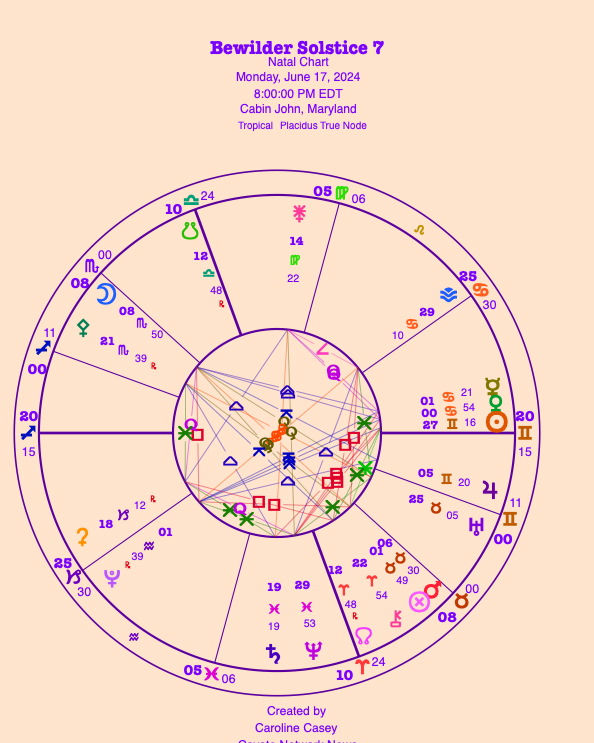
Solstice Full Moon Magic Event
(Chart below)
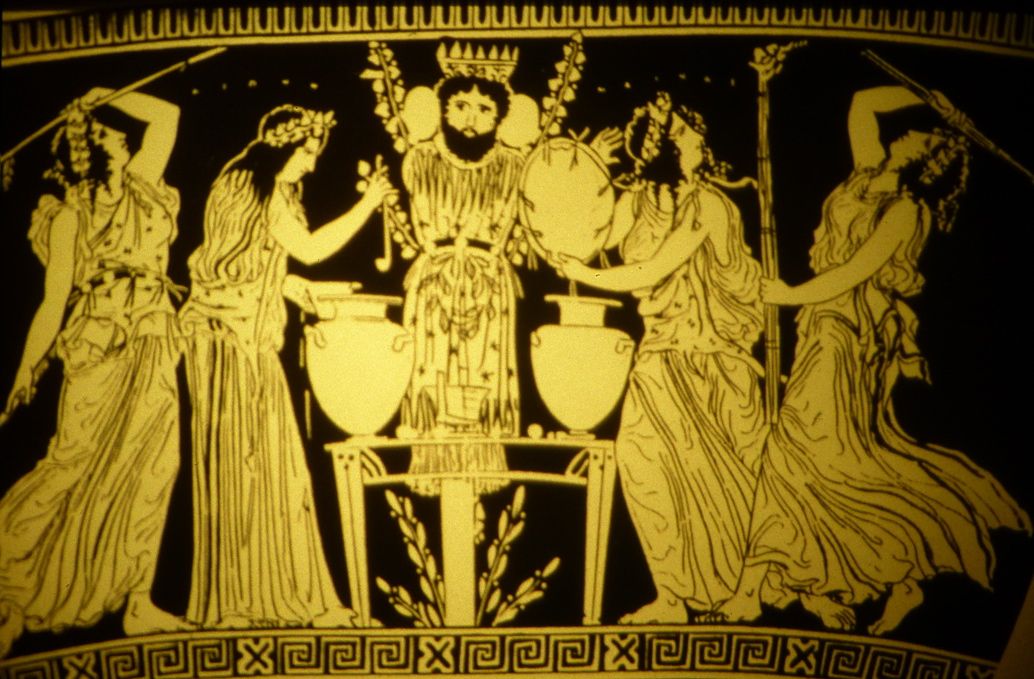
Bee Priestesses (Meanads) making sacred intoxicant Honey Mead for Bacchus, Dionysian ritual
Tis the Capricorn-Cancer Full Honey-Moon…
Of inviting in Saturnine Structures in accord with Big Mama’s dedication to the lives of all her Flora Fauna Funga children…
*************************
We be engaged in on-going dance with Saturn stationing…
Saturn: “Uh-oh uh-oh – might get something done!”
(Sayeth my great ally Sylvia)
Happy Solar Return Watergate break-in ….!
June 17, 1972: The plumbers are arrested at 2:30 a.m. in the process of burglarizing and planting surveillance bugs in the Democratic National Committee offices at the Watergate Building Complex.
Frank Wills (February 4, 1948 – September 27, 2000) was an American security guard best known for his role in foiling the June 17, 1972, break-in at the Democratic National Committee inside the Watergate complex in Washington, D.C.
********* Festival of accountability….
John Barrett, the arresting officer is a neighbor, whom I have met….
All honor to all of us having a role to play, to dree our weird, being agents of Saturn,
at this dangerous, tippy, opportune time…

Calling in some of that Saturnine serendipity…
And in the words of The Pancha Tantra:
“Since sneak and scamp and snake – so often undertake –
a scheme that does not thrive – the world wags on – alive!”
(apologies to Snake)
Since, evil is intrinsically stupid – we have a chance…
*****************************
Sean:
“One night last week when I was at the edge of sleep my yurt was filled with fireflies, dancing new constellation into being in each moment. Though the stars are far enough away to appear still to us they move in these same ways too. To take part in the dance we need to be aware of the movement of everything and of the fluidity of the new patterns we constellate. When Graeber and Wenbrow show us the myriad forms human societies have taken they are showing us the same thing. Let us let go of the desire for grand plans and manifestos in favor of adding our own creative improvisations to the music and the dance.”
CWC: chiming in, “Hey!
I like our manifestos of dedicated devotion…”
Needn’t be stuffy….
Encouraging all to have something tonight … could be a sentence scribbled on a piece of paper,
Or a stone that one has infused with desirable dedication…
Or
A “shambles” comprised of whatever’s at hand, lint from our pockets, a coin, a feather….
Because as we each hold some incarnational expression of our troth we by plighting….
Our betrothal …..
On the way to the Solstice Full Moon Wedding…
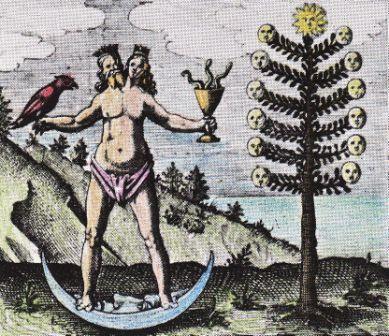
We shall all, as team, in spirit of Mutual Aid,
Bless each held, silent dedication…
With exuberant “Woof-Woof!”
***********
Sean’s message
Goes well with essay in Wash Post by Tiya Miles author of “Night Flyer” – “How the Natural World helped guide Harriet Tubman…”
“The stars had watched over her, and she would, in turn, observe their light, seeing in these gaseous bodies a host of incandescent messengers…..”
“Waterways had shored her up,”
And gave
her and those she was guiding- safety…
Big Mama…
“Her most intimate natural allies seem to have been those sprung – from the soil- weeds
that defied ordered, hierarchical society
And trees….
“By the end of her life, she had herself become like these various features of Nature: a guiding star, a giving tree, a saving river and a bracing rock in the lives of the people who depended on her and on whom she could depend for companionship……”
Worthy aspirations …..
More on her effective animism – tonight..
Along with the Co-Operators standing by…
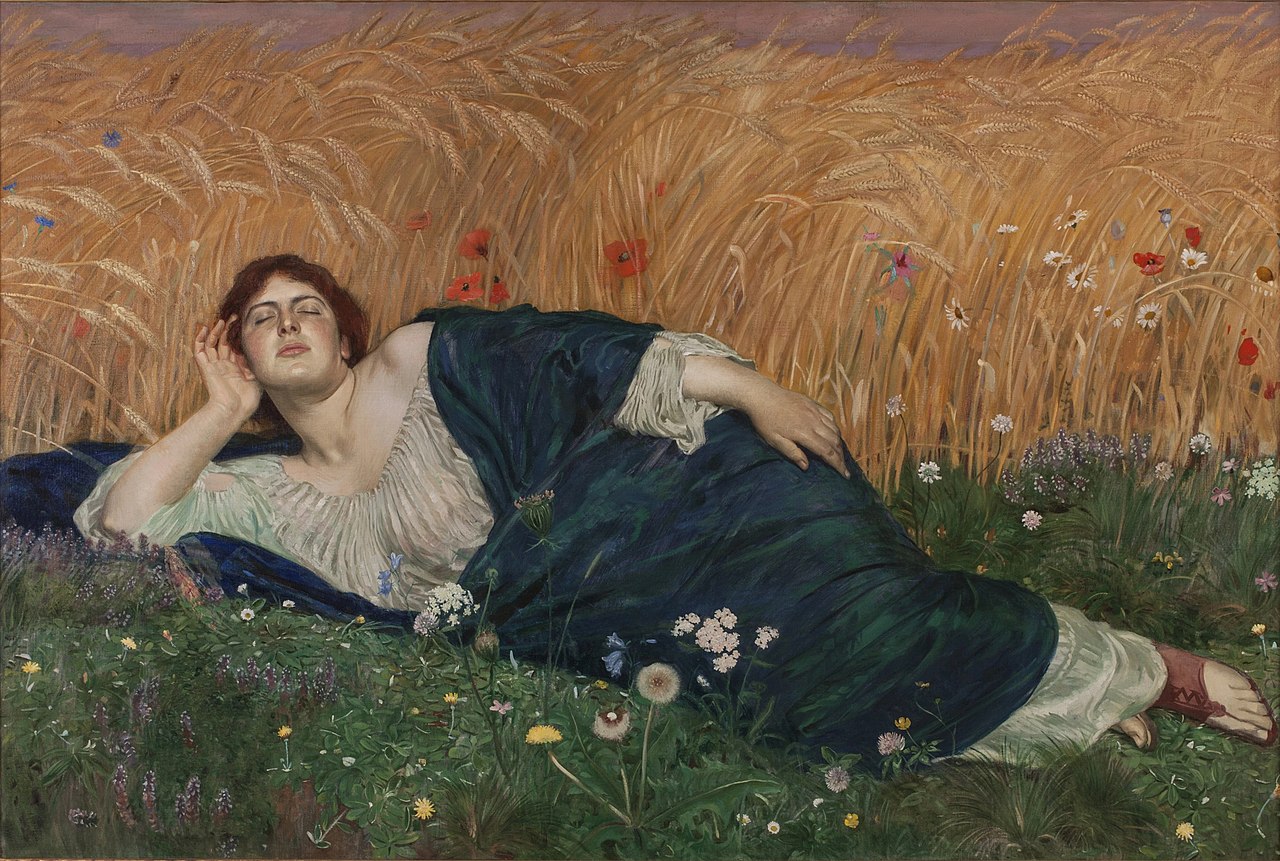
Ceres by Osmar Schindler
Moon Quintiles Ceres
Neptune quintiles Ceres….
Dedicating, pledging to the Earth-
opens the path for us to emerge from our bewildering wandering –
Into Light….
(Whole world be wittily adhd, bi-polar….
“Diagnostic” terms we use once to start the conversing,
Then dissolve in Neptune’s fountain, of liberating fresh re-framing imagery…)
I have been re-reading, and listening on audible to”Dawn of Everything”-
P.92 especially
“The historical importance of eccentricity…”
Let us honor the etymology of
Eccentric, ecstatic
And sacred…..
The essential Value of the Trickster Outsider——
To true community…
Be the guiding theme of our Council Cahoot…
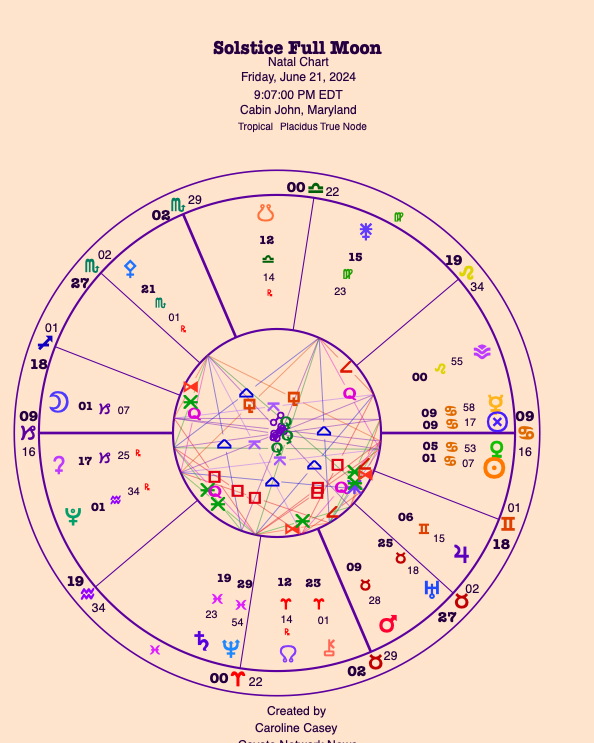
On-going Neptune quintile Ceres….
Venus quintiles Chiron….Whatever be our dedicated craft- Mentors have arrived to support…
And may our loves be wise and kind….
&
May our marriages be as good spirited, wise-cracking detective fun!
Pg. 92 in the book, Pg. 114 in the PDF
“The historical importance of eccentricity…”
IN WHICH WE DISPOSE OF LINGERING ASSUMPTIONS THAT
‘PRIMITIVE’ FOLK WERE SOMEHOW INCAPABLE OF
CONSCIOUS REFLECTION, AND DRAW ATTENTION TO THE
HISTORICAL IMPORTANCE OF ECCENTRICITY
In the last chapter, we suggested that the really insidious element of
Rousseau’s legacy is not so much the idea of the ‘noble savage’ as that of
the ‘stupid savage’. We may have got over the overt racism of most
nineteenth-century Europeans, or at least we think we have, but it’s not
unusual to find even very sophisticated contemporary thinkers who feel it’s
more appropriate to compare ‘bands’ of hunter-gatherers with chimps or
baboons than with anyone they’d ever be likely to meet. Consider the
following passage from the historian Yuval Noah Harari’s Sapiens: A Brief
History of Humankind (2014). Harari starts off with a perfectly reasonable
observation: that our knowledge of early human history is extremely
limited, and social arrangements probably varied a great deal from place to
place. True, he overstates his case (he suggests we can really know nothing,
even about the Ice Age), but the basic point is well taken. Then we get this:
The sociopolitical world of the foragers is another area about
which we know next to nothing…scholars cannot even agree on
the basics, such as the existence of private property, nuclear
families and monogamous relationships. It’s likely that different
bands had different structures. Some may have been as
hierarchical, tense and violent as the nastiest chimpanzee
group, while others were as laid-back, peaceful and lascivious
as a bunch of bonobos.
So not only was everyone living in bands until farming came along, but
these bands were basically ape-like in character. If this seems unfair to the
author, remember that Harari could just as easily have written ‘as tense and
violent as the nastiest biker gang’, and ‘as laid-back, peaceful and
lascivious as a hippie commune’. One might have imagined the obvious
thing to compare one group of human beings with would be…another group
of human beings. Why, then, did Harari choose chimps instead of bikers?
It’s hard to escape the impression that the main point of difference is that
bikers choose to live the way they do. Such choices imply political
consciousness: the ability to argue and reflect about the proper way to live –
which is precisely, as Boehm reminds us, what apes don’t do. Yet Harari,
like so many others, chooses to compare early humans with apes anyway.
In this way, the ‘sapient paradox’ returns. Not as something real, but as
a side effect of the weird way we read the evidence: insisting either that for
countless millennia we had modern brains, but for some reason decided to
live like monkeys anyway; or that we had the ability to overcome our
simian instincts and organize ourselves in an endless variety of ways, but
for some equally obscure reason only ever chose one way to organize
ourselves.
Perhaps the real question here is what it means to be a ‘self-conscious
political actor’. Philosophers tend to define human consciousness in terms
of self-awareness; neuroscientists, on the other hand, tell us we spend the
overwhelming majority of our time effectively on autopilot, working out
habitual forms of behaviour without any sort of conscious reflection. When
we are capable of self-awareness, it’s usually for very brief periods of time:
the ‘window of consciousness’, during which we can hold a thought or
work out a problem, tends to be open on average for roughly seven seconds.
What neuroscientists (and it must be said, most contemporary philosophers)
almost never notice, however, is that the great exception to this is when
we’re talking to someone else. In conversation, we can hold thoughts and
reflect on problems sometimes for hours on end. This is of course why so
often, even if we’re trying to figure something out by ourselves, we imagine
arguing with or explaining it to someone else. Human thought is inherently
dialogic. Ancient philosophers tended to be keenly aware of all this: that’s
why, whether they were in China, India or Greece, they tended to write their
books in the form of dialogues. Humans were only fully self-conscious
when arguing with one another, trying to sway each other’s views, or
working out a common problem. True individual self-consciousness,
meanwhile, was imagined as something that a few wise sages could perhaps
achieve through long study, exercise, discipline and meditation.
What we’d now call political consciousness was always assumed to
come first. In this sense, the Western philosophical tradition has taken a
rather unusual direction over the last few centuries. Around the same time
as it abandoned dialogue as its typical mode of writing, it also began
imagining the isolated, rational, self-conscious individual not as a rare
achievement, something typically accomplished – if at all – after literally
years of living isolated in a cave or monastic cell, or on top of a pillar in a
desert somewhere, but as the normal default state of human beings
anywhere.
Even stranger, over the course of the eighteenth and nineteenth centuries
it was political self-consciousness that European philosophers came to see
as some kind of amazing historical achievement: as a phenomenon which
only really became possible with the Enlightenment itself, and the
subsequent American and French Revolutions. Before that, it was assumed,
people blindly followed traditions, or what they assumed to be the will of
God. Even when peasants or popular rebels rose up to try to overthrow
oppressive regimes they couldn’t admit they were doing so, but convinced
themselves they were restoring ‘ancient customs’ or acting on some kind of
divine inspiration. To Victorian intellectuals, the notion of people selfconsciously imagining a social order more to their liking and then trying to
bring it into being was simply not applicable before the modern age – and
most were deeply divided as to whether it would even be a good idea in
their own time.
All this would have come as a great surprise to Kandiaronk, the
seventeenth-century Wendat philosopher-statesman whose impact on
European political thought we discussed in the previous chapter. Like many
North American peoples of his time, Kandiaronk’s Wendat nation saw their
society as a confederation created by conscious agreement; agreements
open to continual renegotiation. But by the late nineteenth and early
twentieth centuries, many in Europe and America had reached the point of
arguing that someone like Kandiaronk could never have really existed in the
first place. ‘Primitive’ folk, they argued, were not only incapable of
political self-consciousness, they were not even capable of fully conscious
thought on the individual level – or at least conscious thought worthy of the
name. That is, just as they pretended a ‘rational Western individual’ (say, a
British train guard or French colonial official) could be assumed to be fully
self-aware all the time (a clearly absurd assumption), they argued that
anyone classified as a ‘primitive’ or ‘savage’ operated with a ‘pre-logical
mentality’, or lived in a mythological dreamworld. At best, they were
mindless conformists, bound in the shackles of tradition; at worst, they were
incapable of fully conscious, critical thought of any kind.
Such theories might be considered the high-water mark of the reaction
against the indigenous critique of European society. The arguments
attributed to figures like Kandiaronk could be written off as simple
projections of Western ‘noble savage’ fantasies, because real savages were
assumed to live in an entirely different mental universe. Nowadays no
reputable scholar would make such claims: everyone at least pays lip
service to the psychic unity of mankind. But in practice, as we’ve seen,
little has changed. Scholars still write as if those living in earlier stages of
economic development, and especially those who are classified as
‘egalitarian’, can be treated as if they were literally all the same, living in
some collective group-think: if human differences show up in any form –
different ‘bands’ being different from each other – it is only in the same
way that bands of great apes might differ. Political self-consciousness, or
certainly anything we’d now call visionary politics, would have been
impossible.
And if certain hunter-gatherers turn out not to have been living
perpetually in ‘bands’ at all, but instead congregating to create grand
landscape monuments, storing large quantities of preserved food and
treating particular individuals like royalty, contemporary scholars are at best
likely to place them in a new stage of development: they have moved up the
scale from ‘simple’ to ‘complex’ hunter-gatherers, a step closer to
agriculture and urban civilization. But they are still caught in the same
Turgot-like evolutionary straitjacket, their place in history defined by their
mode of subsistence, and their role blindly to enact some abstract law of
development which we understand but they do not; certainly, it rarely
occurs to anyone to ask what sort of worlds they thought they were trying to
create.
